

STEP

STEP
The STEP glider is designed for sporting pilots who seek a balance between accessibility and performance. It is certified under EN 926-1:2015 & 926-2:2013 Class B, indicating a need for skill in handling dynamic reactions in turbulence. It is compatible with most harnesses, with a recommendation for SUP'AIR models for optimal comfort.
Technical Specifications
The glider is available in five sizes (XS, S, M, ML, L) with varying surface areas, spans, and weights. It features a flat aspect ratio of 5.7 and is certified EN/LTF B. The in-flight weight range varies from 55-125 kg depending on the size.
Equipment Overview
Components include leading and trailing edges, stabilizers, risers, brake handles, and a repair kit pocket. The risers are designed for easy connection and adjustment.
Connecting the Glider
Ensure risers are untwisted and properly connected to the harness using self-locking carabiners. Adjust the harness chest strap width according to the glider size. Install and adjust the accelerator/speedbar for optimal use.
Pre-flight Preparation
Conduct a thorough pre-flight check, ensuring all equipment is in good condition and properly connected. The glider should be laid out in a crescent shape, with lines and risers untangled.
Take-off
Practice ground handling before the first flight. The glider can be inflated using forward or reverse launch techniques, depending on wind conditions. Ensure the airspace is clear before take-off.
Flight Characteristics
The STEP glider is stable and intuitive to control, even in turbulent air. It is designed for optimal performance with hands-up flying and the use of the accelerator. Turns can be efficiently managed with weight shifting and brake input.
Specific Practices
The glider can be towed with certified equipment and personnel. It is not designed for aerobatics or tandem flying. Landing should be approached with maximum airspeed, and the glider should be deflated quickly in high winds.
Fast Descents
Techniques such as Big Ears and 360° spiral dives are for emergencies and require prior training. Big Ears increase sink rate, while spiral dives require careful management of brake input to control descent.
Maintenance and Safety
Regular checks and maintenance are essential for safety. The manual provides guidelines for folding, storage, and mandatory checks to ensure the longevity and performance of the glider.
Specifications and Materials
The glider is constructed using Porcher Sport Skytex fabrics for both outer and inner surfaces, with specific references for different parts such as ribs and reinforcements. The main lines are produced by Edelrid, with various specifications for different cascades and stabilo lines. Brake lines also have specific producer references.
Flight Procedures and Safety
The manual provides detailed instructions on executing maneuvers such as spiral dives and B-line stalls. It emphasizes the importance of gradual practice and maintaining control to prevent aggressive surges and potential loss of consciousness due to high G-forces. The document advises against combining spiral dives with "Ears" and warns that repeated acrobatic maneuvers can prematurely age the glider.
Flight Incidents and Recovery
In the event of a parachutal stall, the manual advises releasing the brakes fully and ensuring symmetrical trim. For spins or asymmetric stalls, the recommendation is to release the brake on the stalled side and control the glider during the dive. Asymmetric collapses require shifting weight to the open side and using brake techniques to stabilize and reopen the wing.
Maintenance and Line Checks
The document includes detailed maintenance sheets for different sizes (XS, S, M, ML) of the glider, specifying line lengths and tolerances. Measurements are provided for risers and lines, with specific instructions for checking and maintaining the equipment to ensure safety and performance.
Recommendations
The manual strongly advises against aerobatic maneuvers and highlights the importance of adhering to the specified procedures to maintain the integrity and longevity of the glider.
Specifications
The document provides detailed specifications for various sizes of the Supair Step paraglider, including sizes XS, S, M, ML, and L. Each size has specific parameters such as maximum and minimum weight in flight, glider weight, number of risers, projected area, and harness details. The classification for all sizes is B, in accordance with standards EN 926-2:2013, EN 926-1:2015, and LTF 91/09.
Procedures
The document outlines maintenance procedures for the glider, emphasizing the importance of regular inspections and careful cleaning. It advises against frequent washing but recommends using a sponge or soft brush with a non-aggressive cleaning agent if necessary. Regular wing inspections are recommended to repair small fabric damages.
Norms and Standards
The gliders are tested and certified according to several standards, including EN 926-2:2013, EN 926-1:2015, and LTF 91/09. The document includes inspection certificates for different sizes, confirming conformity with these standards.
Recommendations
For maintenance, it is recommended to conduct regular inspections and repair any small damages promptly. The document also provides specific measurements for risers and lines, with tolerances noted for accuracy.
Test Results
The document includes test report summaries for shock loading, sustained loading, flight tests, measurement, and line bending tests. All tests were conducted in Villeneuve, with positive results confirming the glider's compliance with the required standards.
Key Data from Tables
The document contains detailed tables with measurements for risers and lines, both cut and sewn lengths, for various parts of the glider. Differences between manual and tested samples are noted, with tolerances specified for accuracy.
Storage and Transport
Store the glider in a dry, cool, and clean place, protected from UV exposure. Ensure the harness and glider are thoroughly dried before storage. Keep metal parts away from corrosive elements.
Product Longevity
Regular servicing is essential, with inspections recommended annually or every 100 hours of flight. Key checks include lines, maillons, carabiners, and material condition. Carabiners should be replaced every five years with certified models.
Repair
Despite high-quality materials, regular inspections at a qualified repair center are necessary. SUP'AIR offers repair services beyond the warranty period.
Environmental Considerations
Materials are selected for technical and environmental friendliness, with most components being recyclable. Follow local recycling guidelines for disposal.
Disclaimer
Paragliding requires skills and sound judgment. Learn in certified schools, obtain insurance, and ensure your skills match weather conditions. SUP'AIR is not responsible for paragliding decisions or activities.
Pilot’s Gear
Essential gear includes a helmet, suitable shoes, and a reserve parachute. The STEP glider is compatible with the entire Sup'Air harness and accessory selection.
Warranty
A 3-year limited warranty covers manufacturing defects. Damage from incorrect use or exposure to aggressive factors voids the warranty.
Contact Information
SUPAIR-VLD, Parc Altaïs, 34 rue Adrastée, 74650 Chavanod, Annecy, FRANCE. Email: [email protected], Phone: +33(0)4 50 45 75 29.
Catalog excerpts
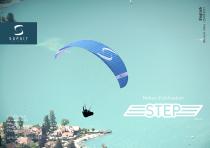
Notice d’utilisation SUP’AIR - VLD 34 rue Adrastée Parc Altaïs 74650 Annecy - Chavanod FRANCE 45°54.024’N / 06°04.725
Open the catalog to page 1
Glider user's manual | STEP Thank you for choosing to fly our STEP to paraglide with. We are delighted to have you on-board to share our passion for paragliding. SUP'AIR has been designing producing and selling accessories for free flying activities since 1984. By choosing a SUP'AIR product you benefit from almost thirty years of expertise, innovation and customer care. We pride ourselves for our work ethics and customer care. We hope you will find this user's manual comprehensive, explicit and hopefully enjoyable as well. We advise you to read it carefully. You will find the latest information...
Open the catalog to page 2
Glider user's manual | STEP Introduction Technical specifications Equipment overview Connecting the glider Pre-flight preparation Take-off Flight characteristics End of the flight Specific practices Fast descents Flight incidents Line layout Materials Measurement table Certificates Maintenance Recycling Mandatory checks Warranty Disclaimer Pilot equipment SUPAIR | STEP | page 3
Open the catalog to page 3
Glider user's manual | STEP Welcome to the world of free flying : a shared world of passion. The STEP meets all the sporting pilot's requirements whishing to fly under an accessible but yet powerful B glider. It was designed for performance flying and will give the pilot maximum comfort to optimize long distance XC adventures. The well though out design and choice of materials were guided by the same quality and longevity objectives. The STEP glider is EN EN 926 -1 : 2015 & 926 - 2 : 2013 Classe B. Certified. This means that the paraglider in spite of good passive safety can react dynamically...
Open the catalog to page 4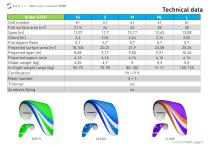
Glider user's manual | STEP Glider STEP Cell number Flat surface area (m²) Span (m) Chord (m) Flat Aspect Ratio Projected surface area (m²) Projected span (m) Projected aspect ratio Glider weight (kg) In-flight weight range (kg) Certification Riser number. Trimmer Acrobatic flying FLUOR SUPAIR | STEP | page 5
Open the catalog to page 5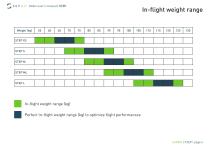
Glider user's manual | STEP In-flight weight range 70 STEP XS STEP S STEP M STEP ML STEP L In-flight weight range (kg) Perfect In-flight weight range (kg) to optimize flight performances SUPAIR | STEP | page 6
Open the catalog to page 6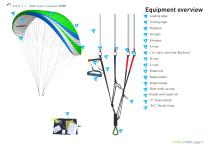
Glider user's manual | STEP Equipment overview Brake holder Brake handle Riser hook-up loop Brake line « A » split risers (for Big Ears) Trailing edge Leading edge Pocket with repair kit. "C" steering ball. "B-C" Recall Strap. SUPAIR | STEP | page
Open the catalog to page 7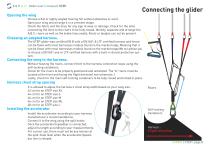
Glider user's manual | STEP Choose a flat or lightly angled training hill without obstacles or wind. Open your wing and arrange it in a crescent shape. Check the fabric and the lines for any sign of wear or damage. Check for the links connecting the lines to the risers to be fully closed. Identify, separate and arrange the A,B.C, risers as well as the brake lines neatly. Knots or tangles can not be present. Choosing an adapted harness. The STEP glider was certified EN B with a EN1651 & LTF certified harness and hence can be flown with most harnesses models found on the market today. Meaning that...
Open the catalog to page 8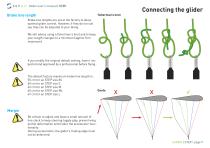
Glider user's manual | STEP Brake line length fisherman's knot Brake line lengths are set at the factory to allow optimal glider control. However, if they do not suit you they can be adjusted to your liking. We will advise using a fisherman's knot and to keep your length changes to a minimum (approx 5cm maximum). If you modify the original default setting, have it inspected and approved by a professional before flying.. The default factory maximum brake line length is : 55 cm for an STEP size XS 60 cm for an STEP size S 62 cm for an STEP size M 65 cm for an STEP size ML 67 cm for an STEP size...
Open the catalog to page 9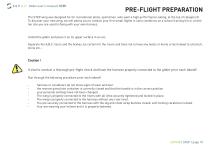
Glider user's manual | STEP PRE-FLIGHT PREPARATION The STEP wing was designed for for recreational pilots, sportsmen, who want a high performance sailing, at the top of category B. To discover your new wing, we will advise you to conduct your first small flights in calm conditions on a school training hill or a familiar site you are used to flying with your own harness. Unfold the glider and place it on its upper surface in an arc. Separate the A,B,C risers and the brakes, be certain for the risers and lines not to have any twists or knots or be hooked to a branch, stone etc... Caution ! It vital...
Open the catalog to page 10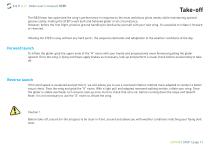
Glider user's manual | STEP The R&D team has optimized the wing's performance in response to the most ambitious pilots needs, while maintaining optimal passive safety, making the STEP a well built and behaved glider in all circumstance. However, before the first flight, practice ground handling to familiarize yourself with your new wing. It is possible to inflate it forward or reversed. Inflating the STEP is easy without any hard point ; the sequence demands and adaptation to the weather conditions of the day. Forward launch To inflate the glider grab the upper ends of the "A" risers with your...
Open the catalog to page 11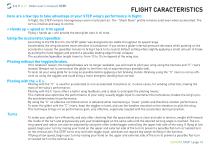
Glider user's manual | STEP FLIGHT CARACTERISTICS Here are a few tips to take advantage of your STEP wing's performance in flight: In flight, the STEP remains homogeneous even in turbulent air. The "Shark Nose" profile remains solid even when accelerated. The turn is intuitive and easy to control. « Hands up » speed or trim speed Flying « hands up » will provide the best glide ratio in nil wind. According to the EN B norm, the STEP glider was designed to be stable throughout its speed range. Accelerated, the wing becomes more sensitive to turbulence. If you sense a glider internal pressure decrease...
Open the catalog to page 12
Glider user's manual | STEP Landing Be certain to always have enough altitude for a safe landing before approaching the chosen Landing Zone ( PTU, PTS, etc...). Never make aggressive maneuvers close to the ground. Always land into the wind ( upwind ), standing up and ready to run to a stop if necessary. Make your landing approach with maximum air speed if possible depending on the weather conditions of the moment, then progressively brake to slow the glider to a final touchdown. Beware not to brake too much, too soon and too rapidly to prevent a possible stall and hard landing. In case of a landing...
Open the catalog to page 13All SupAir-VLD catalogs and technical brochures
 RADICAL 3
30 Pages
 VIP LITE
14 Pages
 EVEREST3
18 Pages
 MINIMAX BUMP
17 Pages
 EVO LITE
39 Pages
 DELIGHT 3
31 Pages
 SKYPPER 2
37 Pages
 ACRO 4
34 Pages
 ALTIRANDO LITE
33 Pages
 PIXAIR 2
35 Pages
 ACCESS 2 BUMP
38 Pages
 ACCESS 2 AIRBAG
37 Pages
 MINIMAX 3
22 Pages
 WALIBI 3
38 Pages
 STRIKE 2
40 Pages
 KINDER 2
20 Pages
 LOUSTIC 2
20 Pages
 FLUID
FLUID30 Pages
 START
START15 Pages
 SHINE
SHINE22 Pages
 LEAF 2
36 Pages
 LEAF 2 LIGHT
32 Pages
 SAVAGE
30 Pages
 STEP light
29 Pages
 SORA 2 PLUS
28 Pages
 EONA 3
36 Pages
 CATALOGUE SUPAIR 2017 2018
39 Pages

- Sport paraglider
- Single place paraglider
- Performance paraglider
- Single place free flight harness
- Paragliding free flight harness
- Reserve parachute
- Single place parachute
- Light free flight harness
- Sport parachute
- Seated position free flight harness
- Mountain paraglider
- Performance parachute
- Intermediate paraglider
- Cross paraglider
- Airbag harness bag
- Beginner paraglider
- Two place paraglider
- Two place parachute