
- Catalogs
- SANDVIK MATERIALS TECHNOLOGY
- Sanicro® 35

Sanicro® 35
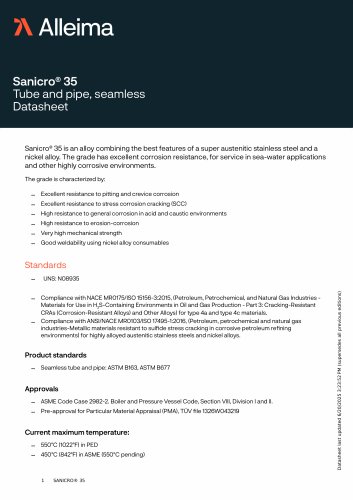
Sanicro® 35
Sanicro® 35 is a high-performance alloy that combines the properties of super austenitic stainless steel and nickel alloy, offering excellent corrosion resistance, particularly in seawater and other corrosive environments. It is characterized by high mechanical strength and good weldability.
Specifications
- UNS: N08935
- Compliance with NACE MR0175/ISO 15156-3:2015 and ANSI/NACE MR0103/ISO 17495-1:2016 standards.
- Product standards: ASTM B163, ASTM B677
- Approvals: ASME Code Case 2982-2, TÜV file 1326W043219
- Maximum temperature: 550°C in PED, 450°C in ASME
Chemical Composition
Nominal composition includes Chromium (27%), Nickel (35%), Molybdenum (6.5%), and other elements in trace amounts.
Applications
Ideal for use in environments with seawater cooling/heating and in acidic conditions due to its resistance to pitting, crevice corrosion, and general corrosion.
Corrosion Resistance
- Excellent resistance to hydrochloric, sulfuric, and nitric acids.
- High resistance in formic and acetic acid mixtures.
- Performs well in alkaline conditions.
Pitting and Crevice Corrosion
Sanicro® 35 has a high PREN value (~52), indicating superior pitting resistance. It also shows excellent crevice corrosion resistance in chloride environments.
Stress Corrosion Cracking
Demonstrates excellent resistance to SCC, outperforming standard austenitic steels in chloride solutions.
Hydrogen Embrittlement
Shows excellent resistance due to high austenitic phase stability.
Fabrication and Mechanical Properties
- Bending requires higher force due to high yield strength.
- Can be expanded into tube sheets like standard austenitic steels.
- Supplied as seamless tube and pipe, solution annealed.
- Mechanical properties include high proof and tensile strength.
Physical Properties
Includes density, thermal conductivity, specific heat capacity, thermal expansion, resistivity, and modulus of elasticity.
Welding
Good weldability with TIG welding recommended. Use of nickel alloy UNS N06059 as filler material is advised.
Disclaimer
Recommendations are for guidance only and suitability should be confirmed based on actual service conditions.
Catalog excerpts
Sanicro® 35 is an alloy combining the best features of a super austenitic stainless steel and a nickel alloy. The grade has excellent corrosion resistance, for service in sea-water applications and other highly corrosive environments. — Excellent resistance to pitting and crevice corrosion — Excellent resistance to stress corrosion cracking (SCC) — High resistance to general corrosion in acid and caustic environments — High resistance to erosion-corrosion — Very high mechanical strength — Good weldability using nickel alloy consumables — Compliance with NACE MR0175/ISO 15156-3:2015, (Petroleum, Petrochemical, and Natural Gas Industries -Materials for Use in H2S-Containing Environments in Oil and Gas Production - Part 3: Cracking-Resistant CRAs (Corrosion-Resistant Alloys) and Other Alloys) for type 4a and type 4c materials. — Compliance with ANSI/NACE MR0103/ISO 17495-1:2016, (Petroleum, petrochemical and natural gas industries-Metallic materials resistant to sulfide stress cracking in corrosive petroleum refining environments) for highly alloyed austenitic stainless steels and nickel alloys. Product standards — Seamless tube and pipe: ASTM B163, ASTM B677 Approvals — ASME Code Case 2982-2. Boiler and Pressure Vessel Code, Section VIII, Division I and II. — Pre-approval for Particular Material Appraisal (PMA), TOV file 1326W043219 Current maximum temperature: — 550°C (1022°F) in PED Datasheet last updated 6/20/2025 3:23:52 PM (supersedes all previous editions)
Open the catalog to page 1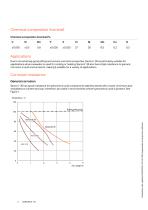
Chemical composition (nominal) % Due to its extremely good pitting and crevice corrosion properties, Sanicro® 35 is particularly suitable for applications where seawater is used for cooling or heating. Sanicro® 35 also has a high resistance to general corrosion in acid environments, making it suitable for a variety of applications. General corrosion Sanicro® 35 has good resistance to hydrochloric acid compared to stainless steels with a lower chromium and molybdenum content and can, therefore, be useful in environments where hydrochloric acid is present. See Figure 1. Datasheet last updated 6/20/2025...
Open the catalog to page 2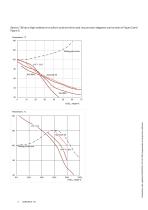
Datasheet last updated 6/20/2025 3:23:52 PM (supersedes all previous editions) Sanicro® 35 has a high resistance to sulfuric acid and nitric acid. Isocorrosion diagrams can be seen in Figure 2 and Figure 3.
Open the catalog to page 3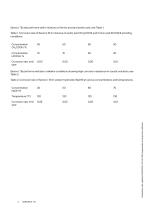
Sanicro® 35 also performs well in mixtures of formic acid and acetic acid, see Table 1. Table 1. Corrosion rate of Sanicro 35 in mixtures of acetic acid (CH3COOH) and formic acid (HCOOH) at boiling conditions. Sanicro® 35 performs well also in alkaline conditions showing high corrosion resistance in caustic solutions, see Table 2. Table 2. Corrosion rate of Sanicro® 35 in sodium hydroxide (NaOH) at various concentrations and temperatures. Corrosion rate, mm/ 0.06 year Datasheet last updated 6/20/2025 3:23:52 PM (supersedes all previous editions)
Open the catalog to page 4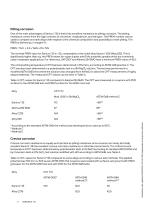
One of the main advantages of Sanicro® 35 is that it has excellent resistance to pitting corrosion. The pitting resistance comes from the high contents of chromium, molybdenum, and nitrogen. The PREN-number can be used to compare and rank alloys with respect to the chemical composition and possibility to resist pitting. The PREN is defined as, in weight-%; The nominal PREN value for Sanicro® 35 is ~52, comparable to the nickel alloy Sanicro® 625 (Alloy 625). This is significantly higher than e.g. the PREN values for super duplex and 6 Mo austenitic grades which are commonly used in seawater applications....
Open the catalog to page 5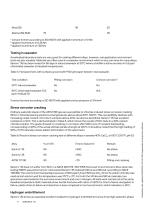
crevice formers according to ISO 18070 with applied momentum of 3 Nm applied momentum of 0.28 Nm 3) applied momentum of 1.58 Nm 1) Testing in seawater Accelerated laboratory tests are very good for ranking different alloys, however, real application environment tests are also valuable. Materials are o en used in a seawater environment which is very corrosive for many alloys. Sanicro® 35 has been tested for 90 days in natural seawater at 30°C where a biofilm is active and also in 0.5 ppm chlorinated seawater at elevated temperatures. Table 5. Flat specimens with surfaces ground with P120 grit paper...
Open the catalog to page 6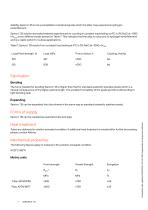
stability. Sanicro® 35 is not a precipitation-hardened grade which the latter may experience hydrogen embrittlement. Sanicro® 35 solution annealed material experienced no cracking in constant load testing at 4°C in 3% NaCl at -1050 mVSCE at two different loads present in Table 7. This indicates that the alloy is not prone to hydrogen embrittlement and is a viable option for subsea applications. Table 7. Sanicro® 35 results from constant load testing at 4°C in 3% NaCl at -1050 mVSCE Load/Yield strength, % Cracking, Yes/No Fabrication Bending The force needed for bending Sanicro® 35 is higher than...
Open the catalog to page 7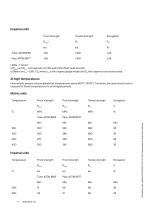
Proof strength Tube, ASTM B163 Pipe, ASTM B677 Tensile Strength a) Rp0 2 and Rp10 corresponds to 0.2% and 1.0% offset yield strength. b) Based on L0 = 5.65 / S0 where L0 is the original gauge length and S0 the original cross-section area. At high temperatures Intermetallic phases are precipitated at temperatures above 600°C (1110°F). Therefore, the steel should not be exposed to these temperatures for prolonged periods. Metric units Temperature Proof strength Proof strength Tensile strength Imperial units Temperature Proof strength Proof strength Tensile strength Datasheet last updated 6/20/2025...
Open the catalog to page 8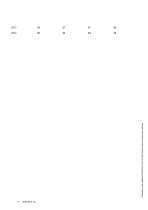
Datasheet last updated 6/20/2025 3:23:52 PM (supersedes all previous editions)
Open the catalog to page 9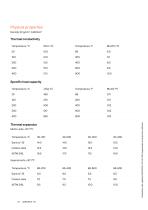
Thermal conductivity Specific heat capacity Thermal expansion Datasheet last updated 6/20/2025 3:23:52 PM (supersedes all previous editions)
Open the catalog to page 10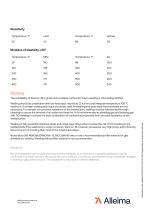
The weldability of Sanicro® 35 is good and a suitable method for fusion welding is TIG welding (GTAW). Welding should be undertaken with low heat input, maximum 1.2 kJ/mm, and interpass temperature 100 °C maximum. A stringer welding technique should be used. Preheating and post-weld heat treatment are not necessary. To maintain full corrosion resistance of the welded joint, welding must be followed by thorough cleaning to ensure the removal of all oxides and heat tint. Ar is recommended as shielding gas and backing gas with TIG welding to achieve the best combination of mechanical properties...
Open the catalog to page 11All SANDVIK MATERIALS TECHNOLOGY catalogs and technical brochures
 SAF™ 2205
14 Pages
 Alleima® 3R12
4 Pages
 Alleima® 6RA11
3 Pages
 Sanicro® 28
19 Pages
Archived catalogs
 SANMAC 4571
10 Pages
 ROUND BAR SIZES AND GRADES
4 Pages
 SANDVIK ROCK DRILL STEEL
4 Pages
 STAINLESS STEELS FOR MACHINING
29 Pages
 AquaSan Ni50
2 Pages
 Sanmac®329
2 Pages
 APM 9980
4 Pages
 APM 2354, UNS S31603
3 Pages
 APM 2723
5 Pages
 APM 2377, UNS S31803
4 Pages
 Sandvik billets and blooms
10 Pages
 Sandvik precision strip steel
16 Pages
 APM 2327, UNS S32505
4 Pages


