
- Catalogs
- SANDVIK MATERIALS TECHNOLOGY
- Sanicro® 28

Sanicro® 28
Sanicro® 28
Sanicro® 28 is a high-alloy austenitic stainless steel known for its exceptional resistance to various forms of corrosion, including stress corrosion cracking, intergranular corrosion, pitting, and crevice corrosion. It is also recognized for its good weldability, making it suitable for highly corrosive environments.
Sanicro® 28 complies with international standards such as UNS N08028, ISO 4563-080-28-I, and EN 1.4563. It is approved by ASME for boiler and pressure vessel codes and meets NACE standards for sulfide stress cracking resistance.
The alloy's nominal chemical composition includes 27% Chromium, 31% Nickel, 3.5% Molybdenum, and 1% Copper, with minimal carbon content.
Sanicro® 28 is used in phosphoric and sulfuric acid production, oil and gas extraction, nuclear power plants, and seawater systems. Its high corrosion resistance is ideal for environments with fluoride-bearing media and chloride-bearing cooling water.
The alloy shows superior resistance to general corrosion in phosphoric and sulfuric acids, outperforming other alloys like Alloy 904L and UNS N08020.
Sanicro® 28 withstands high temperatures in aggressive environments without pitting, with a higher critical pitting temperature than Alloy 904L and Alloy 825.
It exhibits excellent resistance to SCC in chloride solutions and environments containing hydrogen sulfide, surpassing standard austenitic steels like AISI 304 and 316.
The alloy can endure prolonged high-temperature exposure without intergranular corrosion, suitable for welding applications.
Sanicro® 28 can be cold bent to small radii without annealing and can be expanded into tube sheets and machined with tooling adjustments.
Available as seamless tubes and pipes in various dimensions, supplied in solution annealed and white-pickled conditions.
Sanicro® 28 is available in seamless and welded forms, including tubes, pipes, strips, bars, plates, sheets, forged and cast products, and fittings. It is supplied cold worked with high strength properties, specifically Sanicro® 28-110 and Sanicro® 28-125.
Tubes are delivered heat-treated, with solution annealing recommended at 1100-1160°C for 10-30 minutes followed by water quenching. Thin-walled tubes can be air-cooled rapidly.
Details include proof strength, tensile strength, elongation, and hardness in both metric and imperial units, with specifications for different material thicknesses and temperatures.
Sanicro® 28 has good impact strength at room and cryogenic temperatures, with creep strength data provided for various temperatures.
Includes density, thermal conductivity, specific heat capacity, resistivity, thermal expansion, and modulus of elasticity.
Good weldability with recommended methods including manual metal-arc welding and gas-shielded arc welding. Specific filler metals are suggested for TIG/GTAW or MIG/GMAW and MMA/SMAW techniques.
Recommendations are for guidance only, and suitability for specific applications should be confirmed based on actual service conditions.
Catalog excerpts
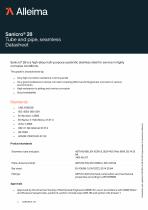
Sanicro® 28 is a high-alloy multi-purpose austenitic stainless steel for service in highly corrosive conditions. The grade is characterized by: — Very high corrosion resistance in strong acids — Very good resistance to stress corrosion cracking (SCC) and intergranular corrosion in various environments — High resistance to pitting and crevice corrosion — Good weldability Product standards Seamless tube and pipe: ASTM B 668, EN 10216-5, SEW 400 (Feb 1991), SS 14 25 Plate, sheet and strip: ASTM B 709, EN 10088-2, SS 14 25 84 Fittings: ASTM A 403 (chemical composition and mechanical properties according to ASTM B668) Approvals - Approved by the American Society of Mechanical Engineers (ASME) for use in accordance with ASME Boiler and Pressure Vessel Code, section III, section I (Code Case 1325-18) and section VIII, division 1. Datasheet last updated 5/9/2025 6:38:20 AM (supersedes all previous editions)
Open the catalog to page 1
— VdTOV-Werkstoffblatt 483 (Austenitischer Walz- und Schmiedestahl) — NACE MR 0103 (Materials Resistant to Sulfide Stress Cracking in Corrosive Petroleum Refining Environments) — NACE MR0175/ISO 15156 (sulfide stress cracking resistant material for oil field equipment) Chemical composition (nominal) % Due to its outstanding corrosion properties, Sanicro® 28 can be used in the most diverse environments. Listed below are a few examples of applications for which this alloy is particularly suitable. Today, Sanicro® 28 is the most widely used metallic material for evaporator tubes in the manufacture...
Open the catalog to page 2
corrosion. The performance of Sanicro® 28 has been excellent. In seawater-cooled heat exchangers and heat exchangers that work with chloride-bearing cooling water, Sanicro® 28 offers high corrosion resistance to both the water and the cooled medium. When a seawater-cooled plant is shut down, there is no need to drain the piping system or flush with fresh water, provided that the shutdown period is shorter than one month and the water temperature is lower than 30°C (85°F). The duplex stainless steel SAF™ 2507 is more resistant than Sanicro® 28 in sea water. Sanicro® 28 was originally developed...
Open the catalog to page 3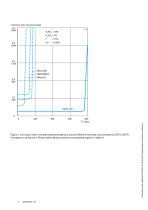
Corrosion rate, mm/year (mpy) Cl , ppm Figure 1. Corrosion rate in contaminated phosphoric acid at different chloride concentrations 100°C (210°F). Comparison of Sanicro® 28 and other alloys (chemical compositions given in table 1). Datasheet last updated 5/9/2025 6:38:20 AM (supersedes all previous editions)
Open the catalog to page 4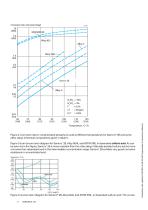
Corrosion rate, mm/year (mpy) Figure 2. Corrosion rate in contaminated phosphoric acid at different temperatures for Sanicro® 28 and some other alloys (chemical compositions given in table 1). Figure 3 is an isocorrosion diagram for Sanicro® 28, Alloy 904L and ASTM 316L in deaerated sulfuric acid. As can be seen from the figure, Sanicro® 28 is more resistant than the other alloys. Naturally aerated sulfuric acid is more corrosive than deaerated acid in the intermediate concentration range. Sanicro® 28 exhibits very good corrosion resistance in concentrated acid. Figure 3. Isocorrosion diagram...
Open the catalog to page 5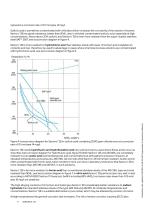
represent a corrosion rate of 0.1 mm/year (4 mpy). Sulfuric acid is sometimes contaminated with chlorides which increases the corrosivity of the solution. However, Sanicro® 28 has good resistance, better than 904L, also in chloride contaminated sulfuric acid, especially at high concentrations. Above about 20% sulfuric acid Sanicro® 28 is even more resistant than the super-duplex stainless steel SAF™ 2507, see isocorrosion diagram in figure 4. Figure 4. Isocorrosion diagram for Sanicro® 28 in sulfuric acid containing 2000 ppm chloride ions at a corrosion rate of 0.1 mm/year (4 mpy). Sanicro® 28...
Open the catalog to page 6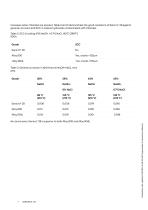
increases when chlorides are present. Table 2 and 3 demonstrate the good resistance of Sanicro® 28 against general corrosion and SCC in sodium hydroxide contaminated with chlorides. Table 2. SCC in boiling 43% NaOH + 6.7% NaCl, 142°C (288°F), Sanicro® 28 Alloy 800 Alloy 904L Table 3. General corrosion in NaOH and in NaOH+NaCl, mm/ year. NaOH NaOH+ As can be seen, Sanicro® 28 is superior to both Alloy 800 and Alloy 904L. Datasheet last updated 5/9/2025 6:38:20 AM (supersedes all previous editions)
Open the catalog to page 7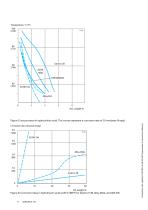
Corrosion rate, mm/year <mpy) Figure 6. Corrosion rates in hydrofluoric acid at 20°C (68°F) for Sanicro® 28, Alloy 904L and AISI 316. Datasheet last updated 5/9/2025 6:38:20 AM (supersedes all previous editions)
Open the catalog to page 8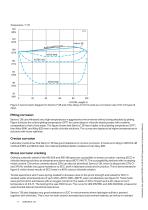
HCOOHr wdght-% Figure 7. Isocorrosion diagram for Sanicro® 28 and other alloys in formic acid at a corrosion rate of 0.1 mm/year (4 mpy). Sanicro® 28 can withstand very high temperatures in aggressive environments without being attacked by pitting. Figure 8 shows the critical pitting temperature (CPT) for some alloys in chloride-bearing water with a salinity comparable to that of sea water. The figure shows that Sanicro® 28 has a higher critical pitting temperature (CPT) than Alloy 904L and Alloy 825 even in acidic chloride solutions. The curves are displaced at higher temperatures in solutions...
Open the catalog to page 9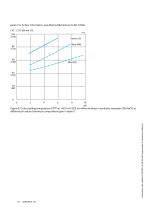
joints. For further information, see Alleima R&D lecture S-58-7-ENG. Figure 8. Critical pitting temperature (CPT) at +400 mV SCE for different alloys in synthetic seawater (3% NaCl), at different pH values (chemical compositions give in table 1). Datasheet last updated 5/9/2025 6:38:20 AM (supersedes all previous editions)
Open the catalog to page 10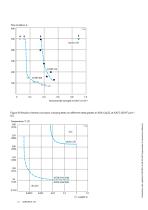
Datasheet last updated 5/9/2025 6:38:20 AM (supersedes all previous editions)
Open the catalog to page 11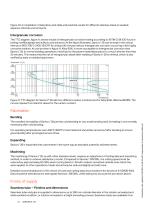
Figure 10. A compilation of laboratory test data and practical results for different stainless steels in aerated, aqueous chloride environments. Intergranular corrosion The TTC diagram, figure 11, shows results of intergranular corrosion testing according to ASTM G-28 (120 hours in boiling iron(III)sulphate and sulfuric acid solution). As the figure illustrates, Sanicro® 28 can be kept in the critical interval of 600-700°C (1100-1300°F) for at least 30 minutes without intergranular corrosion occurring in this highly corrosive medium. As can be seen in figure 11, Alloy 904L is more susceptible to...
Open the catalog to page 12All SANDVIK MATERIALS TECHNOLOGY catalogs and technical brochures
 SAF™ 2205
14 Pages
 Alleima® 3R12
4 Pages
 Alleima® 6RA11
3 Pages
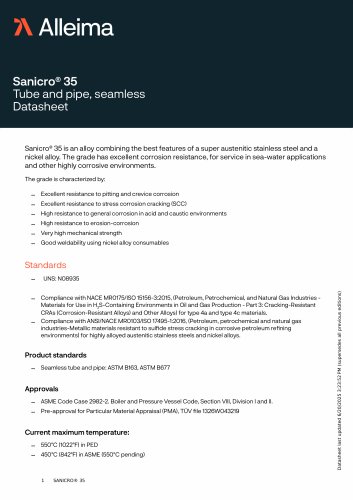 Sanicro® 35
11 Pages
Archived catalogs
 SANMAC 4571
10 Pages
 ROUND BAR SIZES AND GRADES
4 Pages
 SANDVIK ROCK DRILL STEEL
4 Pages
 STAINLESS STEELS FOR MACHINING
29 Pages
 AquaSan Ni50
2 Pages
 Sanmac®329
2 Pages
 APM 9980
4 Pages
 APM 2354, UNS S31603
3 Pages
 APM 2723
5 Pages
 APM 2377, UNS S31803
4 Pages
 Sandvik billets and blooms
10 Pages
 Sandvik precision strip steel
16 Pages
 APM 2327, UNS S32505
4 Pages


