
- Catalogs
- OKUMA CORPORATION
- MULTUS BII


MULTUS BII

1 / 1 PageView full catalog
MULTUS BII
Product catalog summary
Specifications Overview:
- Swing and Distance: The document specifies the swing over bed and saddle, as well as the distance between centers, measured in millimeters (mm) and inches (in.).
- Axis Specifications: Details are provided for the X, Z, Y, and C axes, including control degrees and indexing angles.
- Spindle Details: Information on spindle speed ranges, spindle nose types, and tapered bore/bearing diameters is included. The spindle speed varies from 50 to 6,000 min-1, with different ranges for various models.
- Tooling and Turret: The document outlines the number of tool stations, tool shank/boring bar shank diameters, and speed ranges. It also specifies the maximum torque and milling tool spindle diameter.
- Travel and Feed Rates: Travel distances for various axes are provided, along with rapid traverse rates and cutting feed command ranges.
- Motor and Power: Power specifications for the main and opposing spindles, as well as milling tool spindles, are detailed in kilowatts (kW) and horsepower (hp).
- Machine Dimensions: The height, floor space, and weight of the machines are specified, with variations depending on the model and configuration.
- Additional Features: The document includes information on tailstock travel, coolant power, and optional features such as different spindle configurations and tool capacities.
Key Parameters and Limitations:
- Spindle Speed: The spindle speed is adjustable with auto 2-speed coil switch options, providing flexibility for different machining tasks.
- Tool Capacity: The number of tools and maximum tool dimensions are specified, indicating the machine's capability to handle various tooling requirements.
- Power and Torque: The power output and torque specifications highlight the machine's capacity for heavy-duty operations.
- Travel and Feed Rates: The travel distances and feed rates are crucial for understanding the machine's operational range and efficiency.
Recommendations and Best Practices:
- Optimal Use of Spindle Speed: Utilize the full range of spindle speeds to match the material and machining requirements for optimal performance.
- Tool Selection: Choose tools that fit within the specified maximum dimensions and weight to ensure compatibility and efficiency.
- Regular Maintenance: Regularly check and maintain the spindle and motor systems to ensure consistent performance and longevity.
See more
Catalog excerpts

*HSK-A63 only *1 Distance Between Centers * 2. 3 min/cont [ ]: Optional www.okuma.com Revised: July 29, 2012
Open the catalog to page 1All OKUMA CORPORATION catalogs and technical brochures
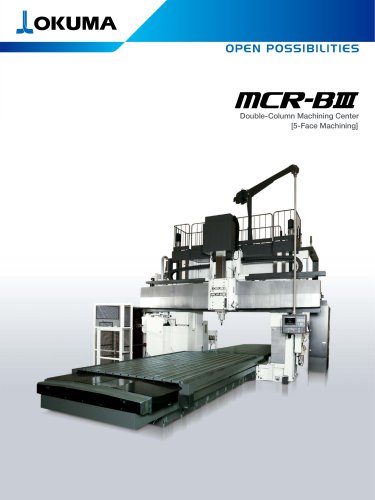 MCR-BIII
13 Pages
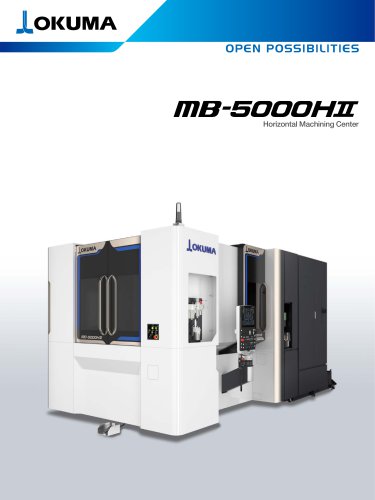 MB-5000HII
11 Pages
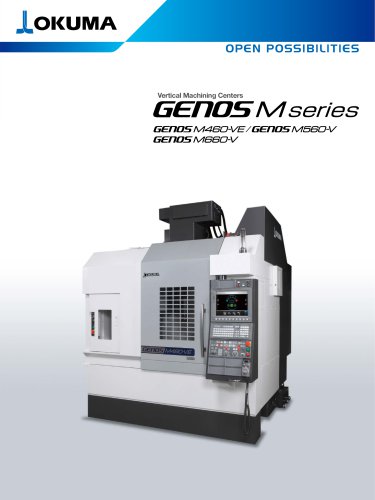 GENOS M560-V
11 Pages
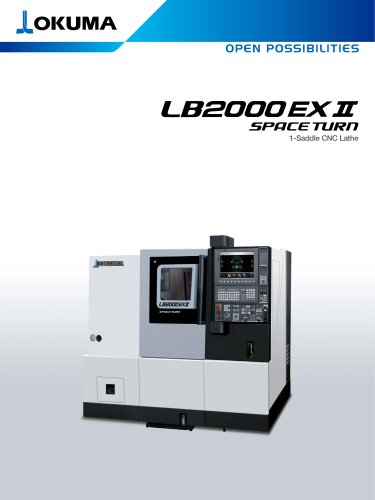 LB2000 EX II
13 Pages
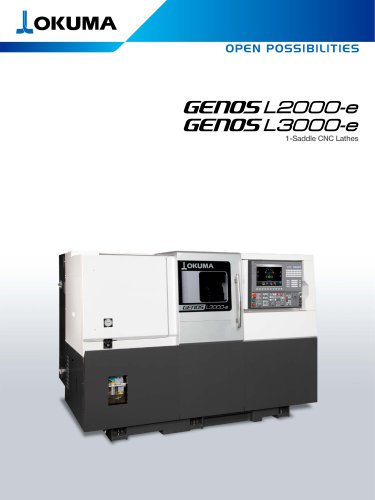 GENOS L2000/L3000-e
13 Pages
Archived catalogs
 Aerospace Solutions
13 Pages
 MACHINE TOOLS CATALOGUE
19 Pages
 LT-EX Series
1 Page
 LU-S Series
1 Page
 LU Series
1 Page
 LU-EX Series
1 Page
 WHEEL MACHINES
1 Page
 Double Column
1 Page


Related Searches
- OKUMA machining center
- OKUMA aeronautic machining center
- 5-axis machining center
- OKUMA CNC machining center
- OKUMA horizontal machining center
- OKUMA vertical machining center
- OKUMA machining center for the aerospace industry
- 3-axis machining center
- Aeronautic grinding machine
- Grinding machine
- Airport high loader
- 4-axis machining center
- OKUMA turning machine
- OKUMA CNC turning machine
- OKUMA aeronautic turning machine
- Machining center with moving table
- OKUMA horizontal turning machine
- Vertical lathe
- Control panel
- Aircraft control panel
*Prices are pre-tax. They exclude delivery charges and customs duties and do not include additional charges for installation or activation options. Prices are indicative only and may vary by country, with changes to the cost of raw materials and exchange rates.
About AeroExpo
AeroExpo is a marketplace that offers B2B players a complete experience, from product sourcing to purchase. AeroExpo is an entity of VirtualExpo Group.
Are you a buyer?
Are you a supplier?