Overview: This document is a comprehensive catalog for ball and
roller bearings by JTEKT Corporation, providing technical specifications, selection guidelines, and product introductions. It aims to assist in selecting optimal bearings for specific applications, focusing on advanced technology, compactness, and reliability.
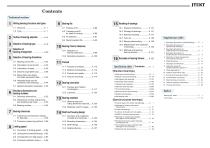
1. Structures and Types: Bearings consist of rings, rolling elements, and a cage, classified by the number of rows: single-row, double-row, or multi-row. The document details radial and thrust bearings and their applications.
2. Bearing Selection: The catalog outlines the selection process based on type, arrangement, and dimensions, including calculations for service life, load, and dynamic equivalent load, with guidelines for allowable axial loads and examples.
3. Technical Specifications: Specifications cover boundary dimensions, tolerances, limiting speeds, fits, internal clearance, preload, and lubrication, providing critical parameters and recommendations for optimal performance.
4. Materials and Design: Information on materials for bearing rings, rolling elements, and cages is provided, along with shaft and housing design, including accuracy, roughness, and sealing devices.
5. Handling and Maintenance: Guidelines for handling, storage, mounting, dismounting, and maintenance are included, with methods for analyzing bearing failures.
6. Product Introduction: Various bearing products are introduced, including deep groove ball bearings, angular contact ball bearings, self-aligning ball bearings,
cylindrical roller bearings, and more, along with special purpose bearings and accessories.
7. Supplementary Tables and Index: Supplementary tables provide additional data on boundary dimensions, tolerances, and conversion factors, with an index for easy navigation.
Conclusion: This catalog is a valuable resource for engineers and professionals in selecting and utilizing bearings effectively, reflecting JTEKT's commitment to innovation and quality.
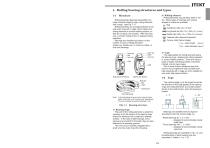
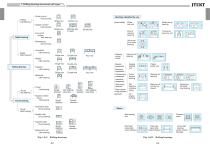
Rolling Bearing Structures and Types: The document categorizes rolling bearings into several types, describing each in terms of structure, load capacity, and suitable applications.
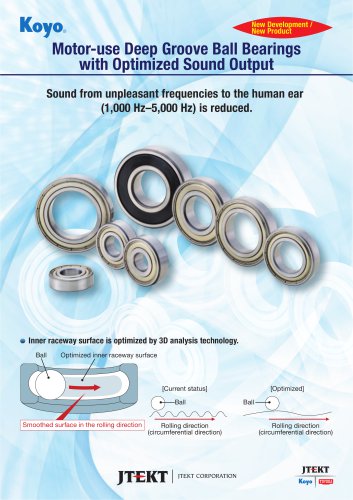
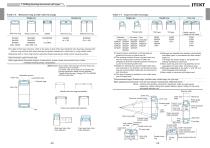
Deep Groove Ball Bearings: Suitable for high-speed operations with low noise and vibration, accommodating radial and axial loads in both directions, used in automotive wheels, electric motors, and industrial equipment.
Angular Contact Ball Bearings: Designed for high-speed and high-accuracy applications, handling radial and axial loads, used in machine tool spindles, gas turbines, and automotive applications.
Cylindrical Roller Bearings: Known for strong resistance to radial loads, ideal for heavy and impact loads, used in machine tool spindles and large motors.
Self-Aligning Ball Bearings: Accommodate misalignment, used in applications where shaft deflection is a concern, such as plummer blocks and power transmission shafts.
Needle Roller Bearings: Offer space savings and high radial load resistance, used in automotive engines and transmissions.
Tapered Roller Bearings: Suitable for heavy load applications, used in automotive wheels and construction equipment.
Spherical Roller Bearings: Self-aligning, handle heavy radial and axial loads, suitable for railway axle journals and rolling mill pinion stands.
Thrust Ball Bearings: Designed for axial loads, used in applications requiring high axial load capacity.
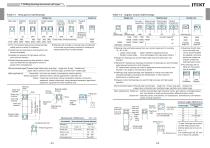
Key Specifications: Detailed tables list specifications for each bearing type, including bore diameter, outside diameter, and contact angles, with recommended cage types and main applications.
Specifications and Calculations: The document provides detailed specifications and procedures for calculating service life and load ratings of various bearings, including examples of service life calculations under different conditions.
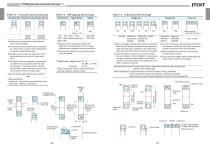
Standards and Norms: Boundary dimensions for bearings are standardized according to ISO 15 and JIS B 1512, with diagrams illustrating dimension series for radial and thrust bearings.
Key Parameters and Recommendations: Highlights critical parameters such as basic dynamic load rating (Cr), dynamic equivalent load (Pr), and the aISO factor, recommending specific equations and tables for accurate calculations.
Tables and Figures: Includes tables and figures providing essential data for calculations, such as load coefficients, gear coefficients, and dimension series diagrams.
Specifications and Boundary Dimensions: Boundary dimensions for each bearing are detailed, including outside diameter, width, height, and chamfer dimensions, categorized into diameter and dimension series.
Snap Ring Grooves and Locating Snap Rings: JIS B 1509 standardizes dimensions and tolerances for snap ring grooves and locating snap rings on bearings.
Bearing Number Examples: Examples illustrate the composition of bearing numbers, including codes for internal clearance, shield, bore diameter, series, tolerance class, and more.
Bearing Series and Codes: Tables list various bearing types, series codes, and dimension series codes, including single-row and
double-row bearings, angular contact bearings, cylindrical roller bearings, and more.
Bearing Tolerances: Specified in JIS standards, based on ISO standards, with tolerances categorized into classes 0, 6X, 6, 5, 4, and 2, with higher classes offering greater precision.
High Precision Applications: Applications requiring high
precision bearings include radar antennas, machine tool spindles, and jet engine spindles, with required tolerance classes specified.
Specifications and Procedures: The document outlines specifications for bearing tolerances, focusing on dimensional and running accuracy, providing detailed methods for measuring bore diameter, outside diameter, and roller set dimensions.
Dimensional Accuracy: Describes how to calculate the single plane mean bore diameter and its deviation, covering the measurement of outside diameter and roller set dimensions.
Running Accuracy: Details the measurement of perpendicularity and runout for both inner and outer rings, explaining how to obtain these measurements using a measuring instrument.
Limiting Speed: Discusses the limiting speed of bearings, highlighting factors such as bearing type, lubrication, and load conditions that affect it.
Frictional Coefficient: Provides reference values for the frictional coefficient of various bearing types, emphasizing the importance of selecting appropriate lubrication.
Bearing Fits: Explains the purpose of fit to prevent detrimental sliding and ensure secure fixation of the bearing rings, based on JIS standards.
Recommendations: For high-speed applications, recommends using high precision bearings, selecting proper cage materials, and ensuring suitable lubrication.
Specifications: Outlines equations for calculating maximum fitting-generated stress in bearings, considering factors like shaft type, material, and dimensions.
Procedures: Describes how radial loads affect inner ring expansion, reducing initial interference, with equations for calculating interference reduction based on load magnitude and fitting surface roughness.
Norms and Recommendations: Recommended fits are provided for various bearing types and conditions, including radial and thrust bearings.
Key Considerations: Emphasizes the importance of adjusting interference to prevent excessive stress and potential fracture.
Tables and Data: Provides detailed data on recommended fits for different bearing types and conditions, including shaft and housing fits for radial and thrust bearings.
Specifications and Tolerances: Outlines specifications for bearing fits, focusing on the axial adjustability of outer rings and the tolerance classes for various load types.
Recommended Fits: Tables provide detailed recommendations for shaft and housing fits for both metric and inch series tapered roller bearings.
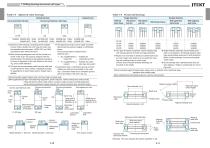
Bearing Internal Clearance: Explains the importance of bearing internal clearance, affecting performance and fatigue life.
Temperature and Load Effects: Provides equations to calculate the decrease in clearance due to fitting and temperature changes.
Tables and Figures: Includes tables and figures illustrating recommended fits, internal clearance definitions, and the relationship between operating clearance and fatigue life.
Specifications: Provides detailed specifications and guidelines for selecting bearing internal clearances, focusing on various types of ball and roller bearings.
Procedures: Specifies corrections for measured clearances due to measurement loads, ensuring accurate clearance values.
Norms and Standards: Some values are prescribed according to JTEKT standards, ensuring consistency and reliability in bearing performance.
Recommendations: Provides examples of non-standard clearance selections based on service conditions, with specific recommendations for applications like railway stock and micro-motors.
Key Data from Tables: Lists minimum and maximum clearance values for different bearing types and sizes, ensuring proper fit and function under specified conditions.
Conclusion: Serves as a comprehensive guide for selecting and adjusting bearing clearances, tailored to specific applications and operational conditions.
Internal Clearance: Outlines formulas for calculating axial internal clearance for different types of bearings, with key variables including radial internal clearance, nominal contact angle, and specific dimensions.
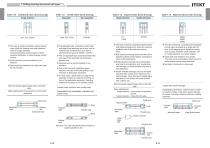
Preload: Discusses the purpose of preload, methods of preloading, and the relationship between preload and rigidity.
Bearing Lubrication: Emphasizes the importance of lubrication for bearing performance, affecting bearing life significantly.
Introduction to Bearing Lubrication: Lubrication is essential for bearings to reduce friction and wear, carry away heat, prolong fatigue life, and prevent corrosion and contamination.
Comparison of Grease and Oil Lubrication: Grease lubrication requires a simple sealing device, is good for low to medium speeds, and has a relatively short life, while oil lubrication is suitable for high speeds, has a long life, and provides excellent cooling and filtration capabilities.
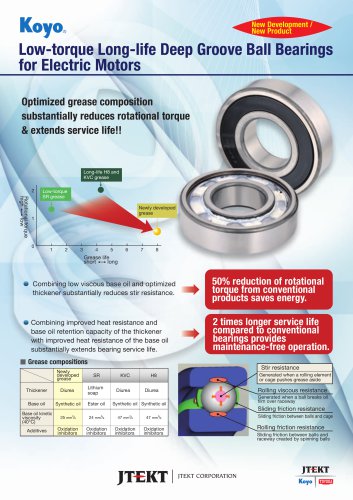
Grease Lubrication: Popular due to its simplicity and long-term effectiveness without replenishment, with specific application methods and recommendations.
Oil Lubrication: Effective at high speeds and temperatures, with various methods based on speed, load, and cooling requirements.
Types of Grease: Different types of grease have varying properties like operating temperature range, mechanical stability, water resistance, and pressure resistance.
Base Oils for Grease: Mineral oil is commonly used as the base oil for grease, with synthetic oils used for specific performance needs.
Thickeners: Greases typically use metallic soap bases as thickeners, with non-soap thickeners used for specific applications.
Additives: Enhance grease performance, including extreme pressure agents, oxidation inhibitors, and other stabilizers.
Consistency: Indicates grease hardness, classified by the NLGI scale for different applications.
Mixing of Greases: Mixing different greases can alter their properties, with recommendations for testing if mixing is unavoidable.
Lubricating Oils: Bearings typically use highly refined mineral oils, with synthetic oils also used, depending on operating temperature and viscosity requirements.
Bearing Materials: Include high carbon chromium steel for rings and rolling elements, with various metals and resins for cages.
Materials for Cages: Choice of materials for bearing cages is crucial for performance and reliability, with common materials including metallic options and synthetic resins.
Shaft and Housing Design: Design considerations include ensuring shafts are thick and short to minimize distortion, and housings are rigid.
Mounting Dimensions: Critical for proper bearing installation, with standard values provided for specific considerations.
Shaft Design: Proper shaft design is essential for bearing mounting, with examples provided for cylindrical and tapered bore bearings.
Sealing Devices: Prevent contamination and lubricant leakage, categorized into non-contact and contact types.
Handling of Bearings: Proper handling and installation are crucial to prevent damage and ensure longevity.
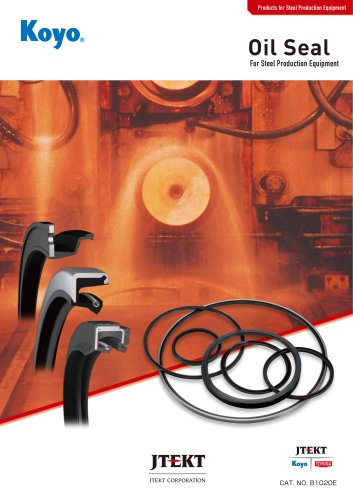
Oil Seals Specifications: Table outlines allowable lip speed and operating temperature range for various oil seal materials.
Recommended Shaft Conditions: Recommendations for shaft materials, surface hardness, and roughness to prevent oil leakage and sealing lip seizure.
Felt Seals and Alternatives: Felt seals are traditionally used but recommended to be replaced with rubber oil seals.
General Instructions for Bearing Handling: Bearings require careful handling due to their precision, with key instructions for maintaining cleanliness and using proper tools.
Bearing Mounting Procedures: Preparation involves inspecting shafts and housings for flaws and ensuring dimensions match specifications.
Test Run and Inspection: A trial operation ensures proper mounting, with checks for abnormalities like noise or excessive torque.
Noise Causes and Countermeasures: Lists noise types, causes, and countermeasures, with recommendations for improving mounting and cleaning procedures.
Overview: Provides guidelines on handling, maintenance, and troubleshooting of bearings, focusing on noise issues, temperature rise, dismounting methods, and failure analysis.
Noise Issues: Various types of noise are discussed, with suggestions for mitigating them through improved cleaning methods and proper lubricants.
Temperature Rise: Abnormal temperature rise can be caused by various factors, with countermeasures provided.
Dismounting Methods: Outlines methods for dismounting bearings, emphasizing careful handling to avoid damage.
Maintenance and Inspection: Regular maintenance and inspection are crucial for extending bearing life and preventing failures.
Failure Analysis: Provides a comprehensive analysis of common bearing failures, outlining causes and countermeasures.
Conclusion: Proper maintenance, accurate fitting, and timely detection of abnormalities are essential for optimal bearing performance and longevity.
Summary of Bearing Failures and Countermeasures: Provides detailed descriptions of common bearing failures and their countermeasures, emphasizing the importance of proper lubrication, fitting, and handling procedures.







 Standard Bearings
 TAPERED ROLLER BEARINGS
 Needle Roller Bearings
 LARGE SIZE BALL & ROLLER BEARINGS
 B1005E EXSEV Product Guidebook
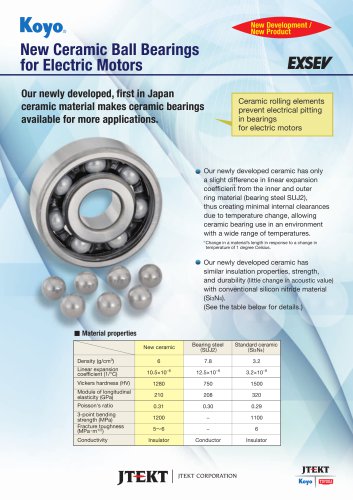
 B1013E Ceramic Bearings
 B1011E Traction Drive Unit
 B2004E Ceramic & EXSEV
 B1021E Slim Bearing
 Oil Seal & O-Ring
 High Wing Series Drive Shafts
 Wind Turbine Generators
 Agriculture and Construction