
- Catalogs
- KOYO BEARINGS VIERZON MAROMME (GROUPE JTEKT)
- B2004E Ceramic & EXSEV


B2004E Ceramic & EXSEV

B2004E Ceramic & EXSEV
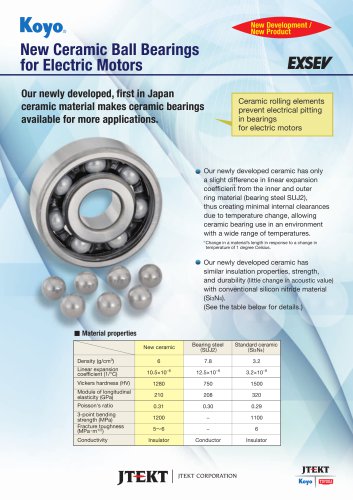
Ceramic bearings are evaluated based on dynamic and static load ratings, service life tests, and material properties. The document outlines the performance characteristics of different ceramic materials used in bearings, such as silicon nitride, zirconia, and silicon carbide, highlighting their suitability for high-performance, corrosive, and high-temperature applications.
Table 1-3 and Table 1-4 provide ratings for ceramic materials and load ratings for full and hybrid ceramic bearings. Silicon nitride is noted for its high load capacity and service life, while zirconia and silicon carbide are suitable for limited load applications in corrosive environments. Full ceramic bearings have comparable dynamic load ratings to steel bearings but higher static load ratings due to their rigidity.
The static load rating for ceramic bearings differs from steel bearings due to minimal permanent deformation in ceramics. Full ceramic bearings can withstand higher loads before cracking compared to steel bearings. Hybrid ceramic bearings use steel rings, allowing the application of steel bearing static load theories. Impact strength tests show ceramic bearings have sufficient impact resistance.
Fitting ceramic bearings requires attention to stress and temperature differences due to varying coefficients of linear expansion between ceramic and steel materials. Maximum stress from interference should not exceed 150 MPa. Temperature changes during operation affect fitting, necessitating careful assessment of maximum operational temperatures.
EXSEV bearings are designed for clean, vacuum, corrosive, and high-temperature environments using materials like martensitic stainless steel and high-speed tool steel. The document provides guidelines for selecting materials based on environmental conditions and performance requirements.
Lubrication is critical for bearing performance, with grease being preferred for its superior performance. In environments where grease is unsuitable, solid lubricants like soft metals, layer lattice materials, and polymeric materials are used. Fluorinated greases are recommended for high-temperature and vacuum applications due to their low evaporation and particle emissions.
This document provides detailed technical information on EXSEV Bearings, focusing on their composition, selection, and application in various environments such as clean, vacuum, high temperature, and corrosive conditions.
Specifications
The document outlines the characteristics of different lubricants and materials used in EXSEV Bearings. It includes tables detailing the molecular structure, viscosity, and vapor pressure of tested PFPEs, as well as the thermal stability, coefficient of friction, and load capacity of major solid lubricants.
Procedures
The document provides equations for estimating the service life of bearings lubricated with solid lubricants and polymeric materials. It emphasizes the importance of operating conditions in determining the service life and provides specific equations for different types of bearings.
Norms and Recommendations
Recommendations are given for selecting bearings based on environmental conditions. For clean environments, low particle emission lubricants are advised. In vacuum environments, the choice of lubricant depends on the pressure and cleanliness requirements. High temperature applications require specific materials and lubricants, with full ceramic bearings recommended for temperatures over 500°C.
Data and Analysis
Tables and figures provide comparative data on particle emissions from various lubricants and the corrosion resistance of materials. The document includes charts for selecting bearings based on cleanliness class and temperature, and it discusses the corrosion resistance of special steels and ceramic materials.
Conclusion
The document concludes with guidance on selecting the appropriate EXSEV Bearings for specific applications, considering factors such as cleanliness, temperature, and corrosion resistance. It highlights the importance of consulting with JTEKT for applications near the specified operating conditions.
- Ceramic Bearings: These bearings terminate their service life due to flaking on the bearing ring or ball surfaces.
- Hybrid Ceramic Bearings: These do not develop flaking or wear on ceramic balls but end their service life due to corrosion of stainless steel bearing rings.
- Corrosion Resistant Bearings: Made from materials like SUS630 and SUS440C, these bearings are evaluated for their corrosion resistance in various solutions.
- Radial load and rotational speed are specified for different bearing types, with service life comparisons provided.
- Test conditions include evaluations of corrosion resistance in various chemical solutions, highlighting the importance of pre-evaluation for corrosion susceptibility.
- It is recommended to contact JTEKT before using Ceramic Bearings in solutions due to potential early wear.
- Non-magnetic bearings are suggested for applications exposed to magnetic fields to prevent disturbances.
- Insulating bearings are recommended to prevent electric pitting in motors or generators.
- Table 3-2: Details the corrosion resistance of special steels and materials for cages in various solutions.
- Table 3-4: Lists typical corrosion-resistant EXSEV Bearings and their applications.
- Figures 4-7 and 4-8: Compare power loss and seizure limits between Hybrid Ceramic Bearings and steel bearings, highlighting the superior performance of Hybrid Ceramic Bearings at high speeds.
- EXSEV Bearings are suitable for high-speed applications like turbochargers and machine tool spindles due to their reduced mass and superior high-speed performance.
- They are also used in environments with extreme temperatures and corrosive conditions.
This document provides detailed specifications and applications for various types of bearings, including aluminum electrolytic capacitor manufacturing equipment, ceramic bearings, and corrosion-resistant bearings. It includes information on bearing numbering systems, materials used, and performance characteristics.
Specifications
The document outlines the dimensions and specifications for different bearings, including boundary dimensions, permissible radial load, and limiting speed. It provides a comprehensive table listing various bearing numbers, their dimensions, and performance factors.
Materials and Construction
Bearings are constructed using materials such as silicon nitride, fluorocarbon resin, and high-hardness stainless steel. These materials provide high corrosion resistance and are suitable for use in extreme environments, including vacuum and corrosive solutions.
Performance and Applications
The bearings are designed for high-speed, high-temperature, and corrosive environments. They are used in applications such as semiconductor manufacturing, LCD manufacturing, and food container washing machines. The document highlights the extended service life of ceramic bearings in acidic and alkaline solutions compared to standard silicone nitride bearings.
Dynamic and Static Load Calculations
The document provides formulas for calculating dynamic and static equivalent loads, which are essential for determining the bearing's performance under different conditions.
Product Availability
Bearings are available as finished products in stock, as parts to be assembled upon order, or produced upon receipt of an order. The document advises contacting JTEKT for details on delivery periods and availability of sizes not listed.
Key Recommendations
For optimal performance, it is recommended to select bearings based on permissible radial load and limiting speed. In corrosive environments, the use of ceramic bearings with fluoropolymer lubrication is advised to ensure longevity and reliability.
- Applicable Environments: Suitable for semiconductor and chemical manufacturing equipment, food machinery, and cleaning equipment.
- Product Specifications: Made with precipitation hardening stainless steel and austenitic stainless steel, with ceramic (silicon nitride) balls and a fluorocarbon resin cage.
- Performance: Service life is affected by rust and wear when used underwater. Selection should be based on allowable radial load and limiting speed.
- Dimensions Table: Provides boundary dimensions, permissible radial load, and limiting speed for various bearing numbers.
- Applicable Environments: Suitable for chemical equipment and transfer systems.
- Product Specifications: Components made of martensitic and austenitic stainless steel, lubricated with KHD grease.
- Grease Properties: KHD grease has a temperature range of -30 to 120°C and is unsuitable for clean environments.
- Dimensions Table: Lists boundary dimensions, basic load ratings, and limiting speeds for various bearing numbers.
- Applicable Environments: Used in baking furnace cars and fans in furnaces.
- Product Specifications: Made entirely of ceramic for ultrahigh temperature environments, typically used in pairs.
- Dimensions Table: Provides permissible radial load and limiting speed for various bearing numbers.
- Applicable Environments: Suitable for semiconductor and LCD manufacturing equipment, vacuum evaporators, and plasma display panel manufacturing equipment.
- Product Specifications: Includes tungsten disulfide in the separator material for lubrication.
- Performance: Highly heat resistant, superior lubrication life, and free from problematic gas emissions.
- Dimensions Table: Lists permissible radial load and limiting speed for various bearing numbers.
- Applicable Environments: Suitable for ultrahigh vacuum environments with low gas emissions.
- Specifications: Made with silver ion-plated balls and stainless steel components.
- Performance: Designed for semiconductor and LCD manufacturing equipment, vacuum motors, and medical equipment.
- Key Features: Supports ultrahigh temperature vacuums, with a lubricant service life expectancy equation provided for estimating bearing life.
- Applicable Environments: Effective up to 300°C in vacuum conditions.
- Specifications: Features a molded PEEK resin cage and stainless steel components.
- Performance: Used in carton manufacturing and LCD cleaning equipment.
- Key Features: Superior heat resistance and excellent lubricant service life from room temperature to 300°C.
- Applicable Environments: Suitable for high-temperature and vacuum environments.
- Specifications: Includes molybdenum disulfide baked stainless steel cage.
- Performance: Used in semiconductor manufacturing, vacuum evaporators, and turbo molecular pumps.
- Key Features: Molybdenum disulfide offers superior heat resistance compared to PTFE coatings.
- Applicable Environments: Designed for use in magnetic fields and vacuum environments.
- Specifications: Composed of non-magnetic stainless steel and silicon nitride ceramic balls.
- Performance: Suitable for semiconductor equipment and superconductivity-related applications.
- Key Features: Provides stable running torque in magnetic fields, unlike steel bearings.
- All bearings are available as finished products or parts in stock, with options for custom orders.
- Contact JTEKT for details on sizes not listed in the tables and for delivery period classifications.
Hybrid Ceramic Bearings are highlighted for their superior performance in high-speed applications across various industries. These bearings offer enhanced service life, reduced lubrication needs, and improved reliability under extreme conditions.
Specifications and Performance
- Turbocharger Bearings: Operate at speeds of 180,000 to 210,000 min–1 and temperatures up to 350˚C with oil lubrication. They offer three times the service life of steel bearings, a 20% increase in acceleration response, and an 80% reduction in oil supply.
- Polygon Scanner Motors: Use grease lubrication and operate at speeds of 26,000 min–1 or higher, providing excellent reliability in high-speed rotation.
- Switched Reluctance Motors: Achieve a 20% to 30% reduction in temperature rise and a rotational speed range 1.2 to 1.5 times higher than steel bearings.
- Machine Tool Spindles: Require high rotational performance, quick acceleration/deceleration, and reduced temperature rises. Hybrid Ceramic Bearings meet these needs with a 20% to 30% reduction in temperature rise.
- Steel Wire Stranding Machines: Utilize these bearings for improved service life and stability in high-speed operations.
- Jet Electrostatic Coating Machines: Use bearings that prevent grease scattering and paint contamination, operating at speeds of 20,000 min–1 with fluorine polymer lubrication.
- Micro Gas Turbine Generators: Benefit from low vibration and noise, with excellent high-speed performance at 100,000 min–1 and 200˚C.
- Motorcycle Superchargers: Employ lightweight ceramic balls for high-speed performance, heat resistance, and abrasion resistance.
- Fuel Injection Systems: Use ceramic balls for improved wear and seizure resistance, compatible with high-pressure fuel injection.
- Rally Car Hub Units: Enhance rigidity and reduce unsprung weight, offering excellent abrasion resistance.
- Inline Skates: Benefit from low torque and improved durability, widely used in speed skates.
- Solar Car Wheel Bearings: Provide stable operation under severe conditions, contributing to power savings.
Supplementary Information
- Shaft and Housing Bore Tolerances: Detailed tables provide deviation classes for nominal shaft and housing bore diameters.
- Standard Tolerance Grades: Numerical values for standard tolerance grades IT are provided, along with steel hardness conversion tables.
- Includes Rockwell, Vicker's, and Brinell hardness scales.
- Details on standard and tungsten carbide balls for testing.
- Specific scales like A-scale, B-scale, and C-scale with corresponding forces (e.g., 588.4 N for A-scale).
- Comprehensive tables for converting between SI units and other units.
- Includes conversions for mass, length, area, volume, force, pressure, and more.
- Specific conversions for units like Angstroms, microns, inches, feet, yards, miles, and various pressure units.
- Comparison of JIS B9920/ISO14644-1 cleanliness classes with U.S. federal standards.
- Details on particle count limits for different classes (e.g., class 1, class 10, class 100).
- Specific particle diameter ranges and corresponding cleanliness class limits.
- Inch/millimeter conversion table for precise measurements.
- Additional tables for SI units and conversion factors related to various physical properties like work, energy, power, and heat.
Catalog excerpts
BEARINGS AND CERAMIC BEARINGS BEARINGS AND CERAMIC BEARINGS FOR EXTREME SPECIAL ENVIRONMENTS EXSEV BEARINGS AND CERAMIC BEARINGS FOR EXTREME SPECIAL ENVIRONMENTS EXTREME SPECIAL ENVIRONMENTS
Open the catalog to page 1
BEARINGS AND CERAMIC BEARINGS FOR EXTREME SPECIAL ENVIRONMENTS ✩ The contents of this catalogue are subject to change without prior notice. We took special care in preparing the contents of this catalogue. JTEKT does not accept liability for errors, omissions, or missing pages, or any loss incurred from the use of this catalogue. Reproduction of this catalogue or any part there of without JTEKT's prior permission is strictly prohibited.
Open the catalog to page 2
Products and Applications Development and Manufacturing Facilities 1 BEARINGS AND CERAMIC BEARINGS FOR EXTREME SPECIAL ENVIRONMENTS Bearings: Composition and Selection 1 Ceramic Bearings and Special Steel Bearings ………………………………………… 3 2 Lubricants for EXSEV Bearings …………………………………………………………………… 11 3 How to Select EXSEV Bearings …………………………………………………………………… 14 4 EXSEV Bearings with Special Characteristics ………………………………………… 19 1 EXSEV Bearings and Ceramic Bearings: Table of Specifications …… 25 2 EXSEV Bearings and Ceramic Bearings: Table of Characteristics … 27 3 Radial Ball Bearings ……………………………………………………………………………………………...
Open the catalog to page 3
• Clean Pro PRZ Bearings • High Temperature Clean Pro Bearings • Clean Pro Bearings 9 DL Bearings • FA Bearings • High Corrosion Resistant Ceramic Bearings • Corrosion Resistant Ceramic Bearings • Ceramic Bearings 9 Corrosion Resistant Hybrid Ceramic Bearings 9 Non-magnetic Hybrid Ceramic Bearings 9 K series Full Complement Hybrid Ceramic Ball Bearings 9 Clean Pro PRZ Bearings • High Temperature Clean Pro Bearings • Clean Pro Bearings 9 DL Bearings • FA Bearings • High Corrosion Resistant Ceramic Bearings • Corrosion Resistant Ceramic Bearings • Ceramic Bearings 9 Corrosion Guard Pro Bearings...
Open the catalog to page 4
Development and Manufacturing Facilities By continuously incorporating new improvements, Koyo Bearings and Ceramic Bearings are applicable in more technologies than ever. Technologies are advancing rapidly and bearings are required to satisfy more complicated and varied requirements under increasingly hostile operating conditions. In response to such needs, JTEKT is committed to the development and manufacture of the EXSEV Bearing Series using the latest research / development and manufacturing facilities. JTEKT intends to supply products that live up to customers' expectations, while contributing...
Open the catalog to page 5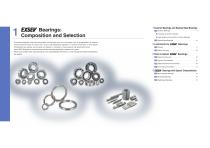
Bearings: Composition and Selection 1 Ceramic Bearings and Special Steel Bearings 1 - 1 special environment such as a clean room, vacuum, high temperature application or corrosive environment, or when special ■ Load ratings and service life of ceramic bearings Special Steel Bearings …………………………………………………………………………… 10 characteristics are required, such as being non-magnetic, or insulating, or having superior high speed performance. Please consult JTEKT when using bearings in a new, unprecedented environment, or when bearings with special characteristics Koyo EXSEV Bearings are a special bearing...
Open the catalog to page 6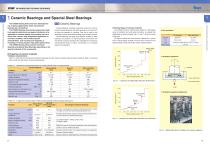
1 Ceramic Bearings and Special Steel Bearings EXSEV Bearings: Composition and Selection The EXSEV Bearing Series has been developed for use in special applications where conventional bearings are not practical. The EXSEV Bearings incorporate components made from special material and use special lubricants, to be applicable in extreme special environments such as a clean room, vacuum, high temperature application, or corrosive condition, and to realize special characteristics, such as being non-magnetic, or insulating, or having superior high speed performance. The EXSEV Bearing series consist...
Open the catalog to page 7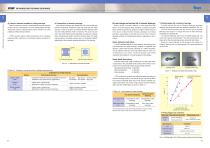
EXSEV Bearings: Composition and Selection 3) Ceramic materials suitable for rolling bearings Table 1-3 shows the results of evaluating the ceramic materials in terms of their characteristics and the rolling fatigue strength. Among the ceramic materials tested, silicon nitride is the most suitable as rolling bearing material. JTEKT uses the silicon nitride produced by the hot isostatic pressing (HIP) method as the standard ceramic material for bearings. 4) Composition of ceramic bearings Koyo ceramic bearings are divided into Full Ceramic Bearings (with all components, namely, the outer ring,...
Open the catalog to page 8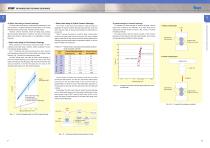
BEARINGS AND CERAMIC BEARINGS 1 2) Static load rating of ceramic bearings • Static load rating of Hybrid Ceramic Bearings 3) Impact strength of ceramic bearings The basic static load rating of a steel bearing represents a load that produces a localized permanent deformation in the rolling element/raceway contact area, impeding smooth rotation. However, ceramic materials, which are highly rigid, produce little permanent deformation. Therefore, the theory of the basic static load rating for steel bearings is not applicable to ceramic bearings. The theory of the static load rating for steel bearings...
Open the catalog to page 9All KOYO BEARINGS VIERZON MAROMME (GROUPE JTEKT) catalogs and technical brochures
 Standard Bearings
241 Pages
 Ball & Roller Bearing
84 Pages
 TAPERED ROLLER BEARINGS
107 Pages
 Needle Roller Bearings
274 Pages
 LARGE SIZE BALL & ROLLER BEARINGS
247 Pages
Archived catalogs
 B1005E EXSEV Product Guidebook
13 Pages
 B1013E Ceramic Bearings
17 Pages
 B1011E Traction Drive Unit
4 Pages
 B1021E Slim Bearing
2 Pages
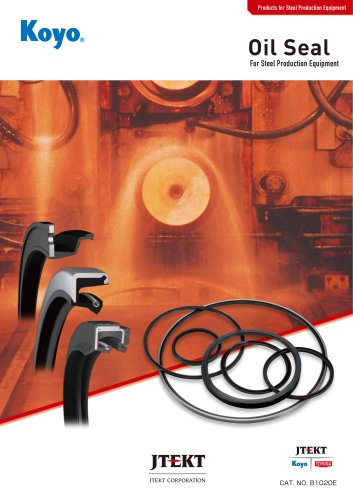
 Oil Seal & O-Ring
126 Pages
 High Wing Series Drive Shafts
30 Pages
 Wind Turbine Generators
4 Pages
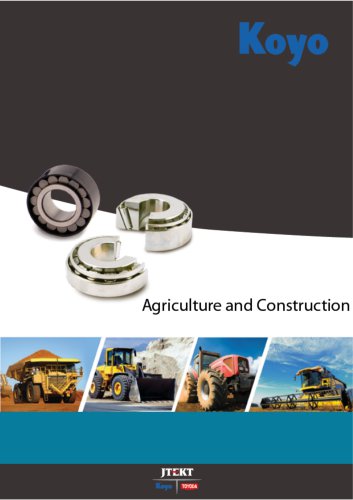
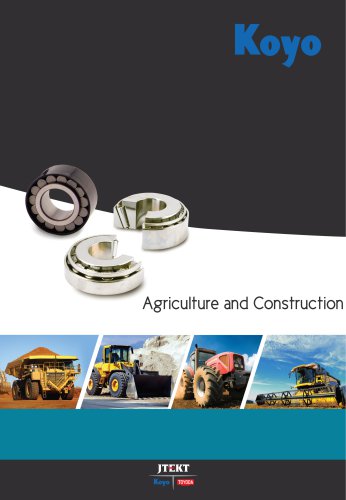 Agriculture and Construction
6 Pages






- Ball bearing bearing
- Airliner bearing
- Roller bearing
- Radial bearing
- Precision bearing
- Single-row bearing
- Double-row bearing
- Heavy-duty bearing
- Deep groove bearing
- Pre-lubricated bearing
- Cylindrical roller bearing
- Axial bearing
- Bearing with cage
- Self-aligning bearing
- High-speed bearing
- Sealed bearing
- Tapered roller bearing