

LMP100
LMP100
This document examines the impact of powder spreading direction on the quality of specimens produced through Selective Laser Melting (SLM) in powder bed additive manufacturing. The focus is on the metallurgical properties of Co–Cr–W–Mo alloy specimens, specifically density, porosity, and tensile properties, based on their position on the build tray.
Materials Used: Specimens were fabricated from Co–Cr–W–Mo and Ti–6Al–4V alloys, with particle sizes ranging from 10–30 μm and 10–45 μm, respectively.
Specimen Selection and Location: Specimens were placed at the start and end of the powder spreading direction on the build tray.
Fabrication Process Conditions: Controlled conditions were used, including specific laser power, scanning speed, and shielding gases.
Density and Porosity Measurement: Density was measured using Archimedes’ principle, and porosity was assessed with a CT scanner.
Tensile Testing: Tensile properties were evaluated using a controlled testing machine.
Powder Packing Density: SEM images were used to analyze powder packing density.
Density and Porosity: Specimens near the start of powder spreading had higher densities and fewer pores compared to those near the end.
Tensile Properties: Specimens at the start location exhibited superior tensile strength, yield strength, and elongation at break.
Powder Particle Size Distribution: Differences in particle size distribution were observed, affecting the quality of the final product.
Primary Cause - Powder Packing Density: Variations in powder packing density are due to the flow mechanism of different particle sizes during powder layering.
Secondary Cause - Fusion Mechanisms: Differences in fusion mechanisms between locations affect laser penetration and melting.
The study concludes that the location on the build tray significantly affects the quality of SLM products due to variations in powder distribution and packing density. Positioning parts closer to the start of the powder spreading direction is recommended for better mechanical properties.
Powder Particle Spattering: Larger particles lead to increased spattering and defects, affecting density and tensile properties.
Melt Pool Formation: Differences in powder-laser interaction and melt pool formation are noted.
The document acknowledges contributions from various authors and funding from research agencies.
The research complies with ethical standards and is licensed under a Creative Commons Attribution 4.0 International License.
Catalog excerpts
The International Journal of Advanced Manufacturing Technology (2021) 112:1159–1170 https://doi.org/10.1007/s00170-020-06563-5 ORIGINAL ARTICLE The effects of locations on the build tray on the quality of specimens in powder bed additive manufacturing Snehashis Pal 1 & Nenad Gubeljak 1 & Tonica Bončina 1 & Radovan Hudák 2 & Teodor Toth 2 & Jozef Zivcak 2 & Gorazd Lojen 1 & Niko Leben 3 & Igor Drstvenšek 1 Received: 22 July 2020 / Accepted: 21 December 2020 / Published online: 2 January 2021 # The Author(s) 2021 Abstract In this study, the effect of powder spreading direction was investigated on selectively laser-melted specimens. The results showed that the metallurgical properties of the specimens varied during fabrication with respect to their position on the build tray. The density, porosity, and tensile properties of the Co–Cr–W–Mo alloy were investigated on cuboid and tensile specimens fabricated at different locations. Two different significant positions on the tray were selected along the powder spreading direction. One set of specimens was located near the start line of powder spreading, and the other set was located near the end of the building tray. The main role in the consequences of powder layering was played by the distribution of powder particle sizes and the packing density of the layers. As a result, laser penetration, melt pool formation, and fusion characteristics varied. To confirm the occurrence of variations in sample density, an additional experiment was performed with a Ti–6Al–4V alloy. Furthermore, the powders were collected at two different fabricating locations and their size distribution for both materials was investigated. Keywords Fabrication location . Powder coating direction . Density . Porosity . Tensile properties . Selective laser melting 1 Introduction Several studies have been carried out on the properties of products made with the powder bed additive manufacturing processes, in particular the selective laser melting (SLM) process [1–3]. However, these investigations were based on employing different processing parameters [4–6], scanning strategies [7], and different build-up directions due to different angular orientations of the part [8, 9]. Eventually, limited research was carried out focusing on the effect of build-up locations by means of the powder spreading direction. Due to the various applications of SLM products in several important fields, such as aerospace, automotive and biomedical implants, sublime quality, and appropriateness are the most Faculty of Mechanical Engineering, University of Maribor, Smetanova ulica 17, 2000 Maribor, Slovenia Department of Biomedical Engineering and Measurement, Technical University of Kosice, Kosice, Slovakia Dentas L.L.C., Cesta k Tamu 70, 2000 Maribor, Slovenia important requirements [10, 11]. The choice of the SLM fabrication process for customizing complex products is becoming higher due to its high manufacturing flexibility, with lower cost and in less time compared to traditional manufacturing methods [12]. In the SLM process, metal powders are deposited in layers, then melted and fused together with a laser to obtain a solid part, as entrusted computer-aided design model [13]. A powder coating system, also known as re-coater or a powder spreading blade, distributes the powder particles onto the building platform using a raking mechanism known as respreading [14]. The powder re-coater collects the powder from the supply chamber, spreads it over the building tray, and conveys the excess powder into the overflow chamber [15]. A limited amount of powder can be carried by the powder re-coater due to the few limitations imposed by surplus powder availability, the process chamber volume, the design of the machine design, etc. The powder is spread by a raking mechanism utilizing the weight force of the powder accumulated by the re-coater over the intended powder layer. The combined weight force acting through the powder particles above the powder layer decreases as the powder is spread behind the re-coater. Hence, it may happen that the powder is unevenly distributed across the build tray f
Open the catalog to page 1
to the end line of spreading. Moreover, the size of the powder particles is in the range from a few micrometers to a few tens of micrometers (10–45 μm according to the producer’s datasheets). On their way from the powder feed chamber to the overflow chamber, the particles pass through the shaking and rolling movement [13]. These movements intensify the filtering and aggregation, which leads to a different packing density of the powder bed [16]. Therefore, it is important to understand the mechanisms of powder spreading, which causes a variation of the powder distribution and thus variations of...
Open the catalog to page 2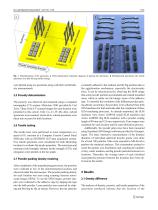
Fig. 1 Manufacturing of the specimens. a Three-dimensional schematic diagram of placing the specimens. b Manufactured specimens (the tensile specimens are after having tensile testing) were plotted using six specimens along with their sixfold density measurements. 2.5 Porosity determination The porosity was observed and measured using a computed tomography (CT) scanner, Metrotom 1500, provided by Carl Zeiss. Three of the CT-scanned images for each location were presented in this article. Only Co–Cr–W–Mo alloy cuboid specimens were scanned, where all six cuboid specimens were taken into account...
Open the catalog to page 3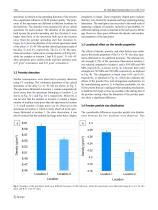
specimens in relation to the spreading direction of the powder has a significant influence on SLM product quality. The properties of the specimens are different at different locations on the build tray. The densities were measured for all six cuboid specimens for each location. The densities of the specimens built up near the powder spreading start line (location 1) were higher than those of the specimens built up at the location away from the powder spreading start line (location 2). Figure 2a, b show the densities of the cuboid specimens made of the alloy Co–Cr–W–Mo and the cuboid specimens...
Open the catalog to page 4All DENTAS SELIMOVIC Midhat S.P. DENTAS catalogs and technical brochures
 LMP100v3
12 Pages