

PAPI

PAPI
The PAPI-300 system complies with ICAO Annex 14, Vol. I, Para. 5.3.5.23 to 5.3.5.45, FAA L-880/1 AC 150/5345-28, and EASA CS ADR-DSN Book 1 standards.
The system is used for PAPI and A-PAPI systems.
- New design concept that surpasses traditional PAPI construction.
- High precision, stable, and reliable structure that is easy to operate and maintain.
- Each unit uses three 105W reflector halogen lamps, powered by a 300W isolation transformer.
- Sharp red-white split line with a transition zone of less than 3 arc minutes, compliant with ICAO Annex 14.
- Built-in intelligent electrical control system that de-energizes the PAPI system if any light unit malfunctions.
- Unique optical design that eliminates the need for complicated adjusting devices for lamp and filter installation or replacement.
- Internal electronic clinometer with a resolution value of 0.01°.
- Four-digit LED display showing real-time angles and original flight landing test angles.
- Modular design for easy maintenance.
- Enclosed optical system to prevent foreign object entry during maintenance.
- Actual operation angle visible from outside for daily checks without opening the cover.
- Optional patented control and monitoring kit for remote monitoring of PAPI angles.
- Triple leg supporting structure for stability and easy angle adjustment.
- Dimensions designed to withstand wind loads up to 320 km/h.
The PAPI-300 is an innovative Precision Approach Path Indicator designed according to ICAO and FAA standards. It features a sharp red and white transition zone, providing pilots with precise visual information. The system is easy to install, adjust, and maintain, ensuring stable and reliable operation.
Catalog excerpts
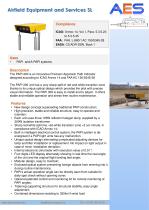
Airfield Equipment and Services SL Compliance ICAO: Annex 14, Vol. I, Para. 5.3.5.23 to 5.3.5.45 FAA: FAA: L-880/1 AC 150/5345-28 EASA: CS ADR-DSN. Book 1 PAPI and A-PAPI systems Description The PAPI-300 is an innovative Precision Approach Path Indicator designed according to ICAO Annex 14 and FAA AC 150/5345-28 The PAPI 300 unit has a very sharp split of red and white transition zone thanks to its unique optical design which provides the pilot with precise visual information. The PAPI 300 is easy to install and to adjust. It offers stable and reliable operation and stress-free routine maintenance. Features • New design concept superseding traditional PAPI construction; • High precision, stable and reliable structure, easy to operate and maintain; • Each unit uses three 105W reflector halogen lamp, supplied by a 300W isolation transformer • Sharp red-white split line, red-white transition zone <3 arc minute, in compliance with ICAO Annex 14; • Built-in intelligent electrical control system; the PAPI system is deenergized if a PAPI light units has any malfunction. • Unique optical design eliminating complicated adjusting devices for lamp and filter installation or replacement. No impact on light output in case of minor installation deviation; • Internal electronic clinometer with resolution value of 0.01°; • Four digits LED display alternately showing in real time the real angle of the unit and the original flight landing test angle; • Modular design, easy to maintain; • Enclosed optical system preventing foreign objects from entering into it during routine maintenance; • PAPI’s actual operation angle can be directly seen from outside for daily spot check without opening cover; • Optional patented control and monitoring kit for remote monitoring of PAPI angles; • Triple leg supporting structure for structural stability, easy angle adjustment; • Contained dimensions resisting to 320km/h wind load www.aes-europe.com
Open the catalog to page 1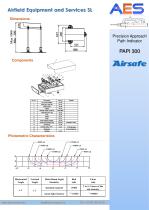
Airfield Equipment and Services SL
Open the catalog to page 2All AES AIRFIELD EQUIPMENT & SERVICES SL catalogs and technical brochures
 Elevated LED Threshold
2 Pages
 Sequence Flashing Light
2 Pages
 Inset Approach
2 Pages
 Elevated LED Approach
2 Pages
 Runway Centreline
2 Pages
 Touch Down Zone
2 Pages
 LED Taxiway Centreline
4 Pages
 LED Stopbar
4 Pages
 Inset LED Runway Guard Light
4 Pages
 LED Guidance Signs
4 Pages
 Taxiway Centreline
2 Pages
 2 lamps Taxiway Centreline
2 Pages
 Stopbar
2 Pages
 Reflective Marker
1 Page
 Isolating Transformers
2 Pages
 Primary Connector Kit
1 Page
 Secondary Connector Kit
1 Page
 Mounting Elevated
1 Page
 Shallow Bases
1 Page
 Obstruction Lighting L.I
2 Pages
 Obstruction Lighting M.I.
2 Pages
 Barikada
2 Pages
 Inset Halogen Approach
2 Pages
 Inset LED Approach
4 Pages
 EUL - SR - LED
2 Pages
 EUL - AP - LED
2 Pages


- Color light
- Airport lighting system
- Runway beacon
- Light-intensity light
- Configuration light
- Obstruction beacon
- Approach beacon
- Power supply
- Taxiway light
- AC/DC power supply
- Windsock
- Airport windsock
- Airport sign
- Airport floodlight
- Windsock with mast
- Runway edge light
- Runway sign
- Internally illuminated windsock
- Constant current power supply